Bristol researchers take major step towards Alzheimer’s gene therapy
Researchers funded by Bristol-based charity BRACE Dementia Research have developed a potential new gene therapy for Alzheimer’s.
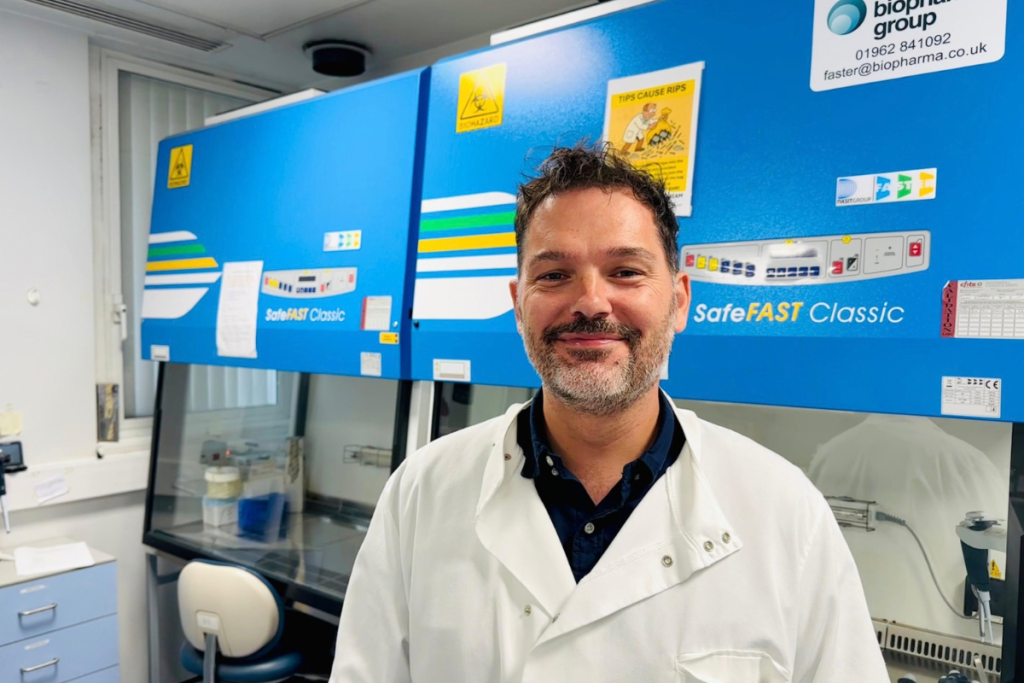
Dr Kemp and his research team at the University of Bristol have been able to convert the high-risk Alzheimer’s gene, APOE4, into the lower-risk APOE3 gene.
By targeting these genes, the hope is that the therapy could prevent or slow Alzheimer’s in people who carry the high-risk APOE4 gene, which is found in around one in four individuals.
Dr Kemp’s revolutionary new research used human immune blood cells. Importantly, these immune cells were derived from people living with Alzheimer’s disease who also had the high-risk APOE4 gene.
By using human immune cells, researchers were able to observe responses that were as close to real-life human responses as possible.
Importantly, this innovative approach showed little impact on the rest of the cells’ DNA, suggesting the therapy could be safe with minimal unwanted effects.
These promising results suggest the experimental gene therapy could be suitable for clinical use and would be administered through the bloodstream, bypassing the blood-brain barrier and targeting the whole brain.
It marks a significant development, as some Alzheimer’s treatments have been partially or totally prevented from entering all parts of the brain by this barrier, making them less effective.
This is a potential major breakthrough, which could help address a condition that affects millions of people worldwide.
Dr Kevin Kemp, University of Bristol, says:
“Our research is still at an early stage, but we’re really excited by the results we’ve seen so far. By targeting the high-risk APOE4 gene, we hope to tackle one of the key risk factors for Alzheimer’s and ultimately develop a new treatment for the disease.”
Liberty Harrison, CEO of BRACE Dementia Research, adds:
“We welcome this exciting development from Dr Kemp, therapies that can reduce or prevent APOE4 from contributing to the onset of Alzheimer’s represent a major unmet clinical need and are urgently required. BRACE is a small charity, and we are proud of the impact we have had on this crucial area of research.”
Share this page