
£100k awarded to Swansea researchers developing gut hormone dementia treatment
BRACE has awarded Swansea University researchers £102,949 to investigate a stomach hormone's role in a potential new dementia treatment.
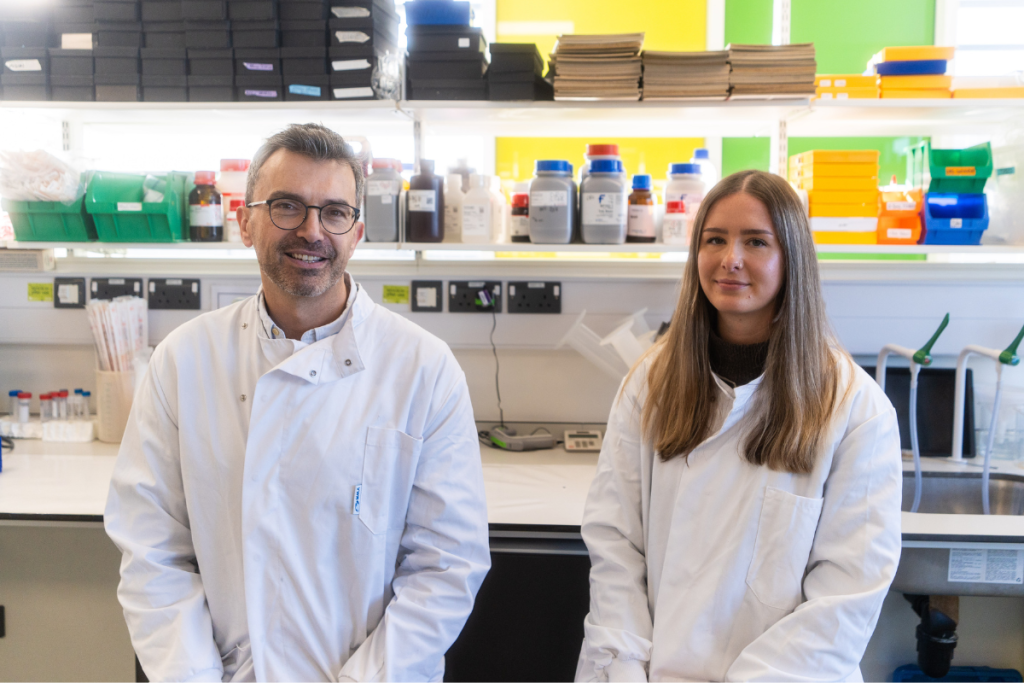
The funding has been awarded to Prof Jeff Davies and will be used to support a PhD student who will work alongside Prof Davies to conduct laboratory research into ghrelin, a stomach hormone best known for regulating appetite. The hormone also plays a role in the brain's immune system. The team will pursue the positive benefits of ghrelin in the hope of developing a dementia treatment.
Why is the stomach hormone important?
Ghrelin exists in two forms; one has positive effects and the other negative effects on the brain. The first, known as acylated ghrelin, is protective and encourages new brain cells and reduces inflammation. The second, unacylated ghrelin works against these benefits. It blocks the positive effects of acylated ghrelin and has been found to impair memory function – a key symptom in Alzheimer’s disease.
Crucially, higher levels of unacylated ghrelin have been found in people with Parkinson's disease dementia, suggesting this may play a direct role in cognitive decline and in dementia.
What will the research involve?
Building on findings from a previous BRACE-funded pilot project, the researchers will investigate ways to increase the ‘good ghrelin’ through a targeted drug pathway.
Prof Davies and his PhD student, Jessica Stoneman, will use donated immune cells from people that have different types of dementia, such as Dementia with Lewy Bodies, Alzheimer’s and Parkinson’s with dementia.
They will study the immune cells to see how each type of ghrelin affects brain health before testing a drug-like molecule that the team has already developed.
The ‘drug’ encourages acylated ghrelin's brain protective properties and if positive results are found in the immune cells with dementia, it is hoped that this approach could create a new treatment pathway to reduce brain inflammation and treat dementia.
Prof Jeff Davies from Swansea University says:
“There are very few treatments for dementia because we do not fully understand the condition. This additional funding offers the team the chance to build on the research we have previously conducted into gut hormones and further investigate how they interact with immune cells and affect brain health. We hope this research will help take us one step closer to achieving new drugs and treatments for people living with dementia.”
Liberty Harrison, Interim CEO of BRACE Dementia Research says:
“Prof Jeff Davies’ innovative approach could result in a novel way of tackling dementia. While progress is being made in the fight against dementia, more meaningful treatments cannot come soon enough. Thank you to our supporters for making this research possible."