
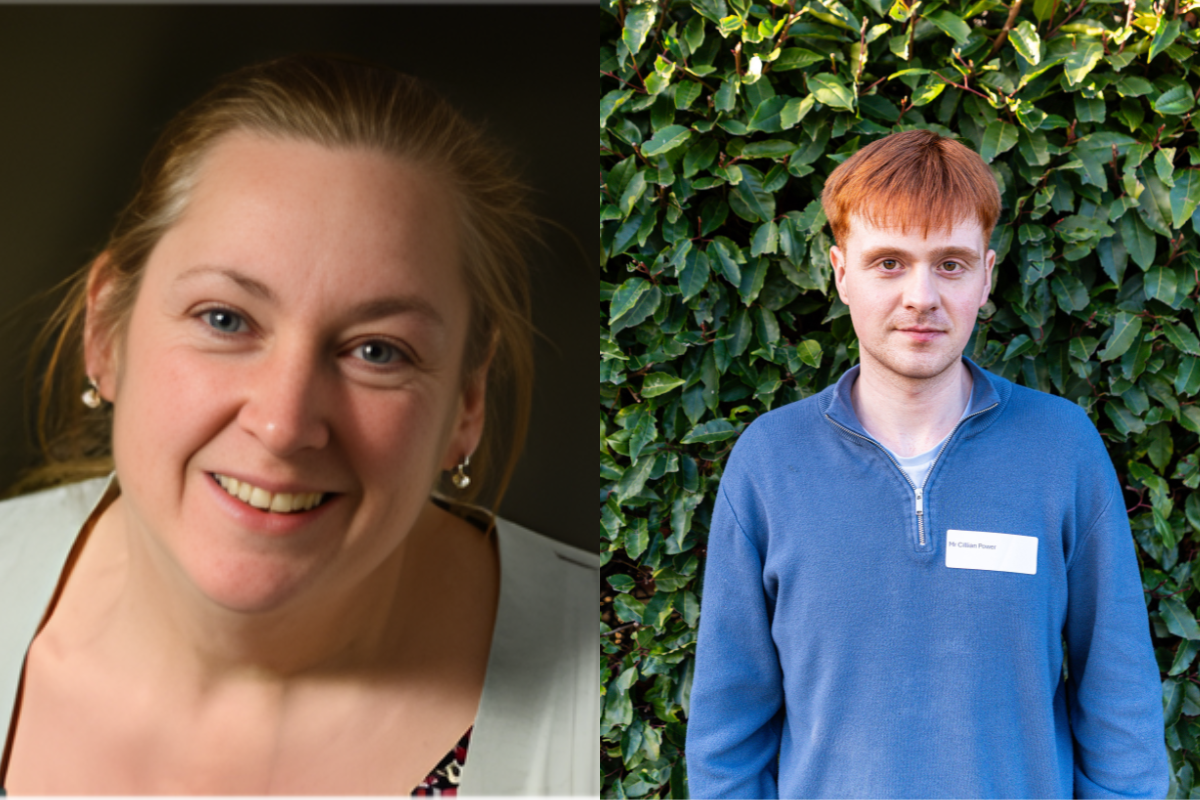
Professor Wendy Noble
PhD: University of Exeter, 2024 │ PhD Student: Cillian Power
Deciphering cell-type specific effects of P2X7R antagonism in Lewy body dementia.
Treating Lewy body dementia by targeting the P2X7 receptor.
Summary
Professor Wendy Noble and her team are studying how a receptor in the brain called P2X7R influences Lewy body formation, and which types of brain cell are responsible.
What do we already know?
Dementia with Lewy bodies is a specific type of dementia affecting over 100,000 people in the UK. This condition occurs when small proteins called alpha-synuclein clump together, forming Lewy bodies that can’t be broken down by the body. These Lewy bodies disrupt the communication between cells in the brain, causing them to die.
Researchers don’t fully understand why alpha-synuclein clumps together, but they think it might be linked to inflammation in the brain, known as neuroinflammation. Evidence suggests that unchecked inflammation is damaging in Lewy body dementia, as it is in other forms of dementia including Alzheimer’s disease
P2X7R is a receptor involved in neuroinflammation and is found on two types of cells in the human brain called astrocytes and microglia. They cells help to repair, remove waste and unhealthy parts of the brain cells which are involved in communication (neurons).
Alpha-synuclein is believed to affect the activity of P2X7R to promote neuroinflammation, so reducing the activity of P2X7R could reduce the damaging impact of alpha-synuclein.
What is this project trying to find out?
In this project, the team aim to find out if specific inflammatory pathways controlled by P2X7R regulate alpha-synuclein accumulation as Lewy bodies, leading to neuron damage and ultimately dementia. This information could help researchers develop new treatments that target a specific cell type.
They’re going to use a model called long-term brain slice cultures, which is exactly as it sounds. Slices of brain tissue that are kept in specific conditions to keep them alive. This project will alter the tissue to express alpha-synuclein and recreate some aspects of Lewy body dementia. It’s a great tool to monitor changes to brain cells in relation to P2X7R activity.
Why is this important?
This research will increase our understanding of the cellular events underlying dementia. If successful, this work may support clinical trials for new dementia treatments that are focused on the P2X7 receptor or more broadly on brain inflammation. This may be helpful not only for Lewy body dementia, but also other conditions like Parkinson’s disease, in which alpha-synuclein is altered.
What has been achieved so far?
Cillian Power, the PhD student who is working on this project, started at the end of September 2024. Since then, he has attended several induction events and undergone training to introduce him to the university, PhD programme and working safely in the laboratory. Cillian has completed project-specific training in the methods required to establish the model of Lewy body dementia that this project will use and has already generated some interesting data showing the effects of blocking P2X7R on alpha-synuclein proteins. He is currently validating genetic tools to reduce P2X7R expression in either microglia or astrocytes.
Finally, Cillian has written a literature review after thoroughly researching this area, which has helped him to become familiar with research in this field, and to develop his own ideas, which will be used to determine future project directions.
“We are very grateful to BRACE for enabling us to carry out this project. Compared to other forms of dementia such as Alzheimer’s disease, there is relatively little research conducted to increase understanding the biological causes of Lewy body dementia. Without a better understanding of disease, it is very challenging to find new treatments. This funding has allowed us to investigate one possible potential means by which Lewy body dementia progresses, and to determine in laboratory models if we can slow or halt disease. Our hope is that results from this project will support the development of new treatments. The funding has also enabled us to recruit a PhD student and build capacity in dementia research by training the next generation of dementia researchers.”
Professor Wendy Noble
“I am incredibly grateful for the support of BRACE and its donors, whose generosity is not just a financial aid but a catalyst for my growth and success. Your contributions are advancing our understanding of these complex diseases and bringing us closer to developing much-needed therapies for those affected by dementia.”
Cillian Power (BRACE-funded PhD student)
Share this page