
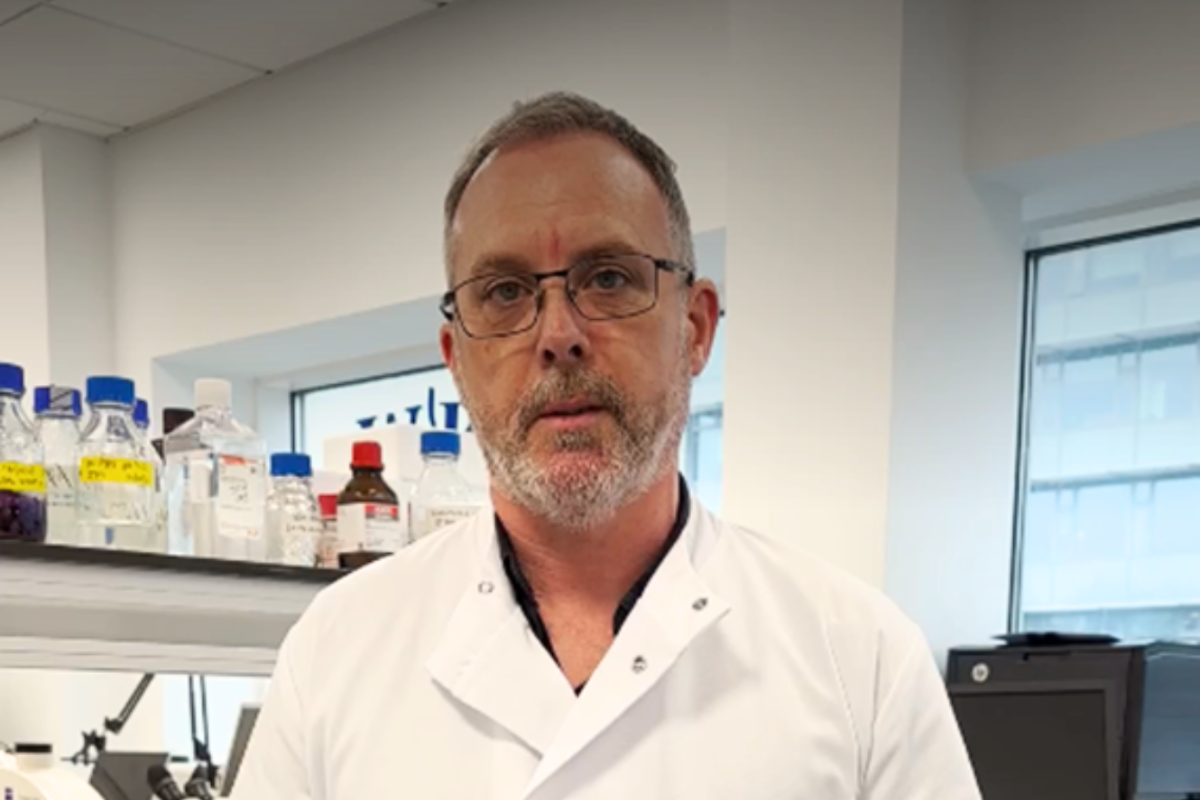
Dr James Murray
Pilot Project: Swansea University, 2025 - 2026
Development of new ageing-related models of dementia using African Turquoise Killifish.
Could fish be key to understanding dementia?
Summary
Dr James Murray and his research team will study how specific Alzheimer’s disease genes change the path of natural ageing using Killifish.
What do we already know?
The brain is very complex. In some research projects, animal models such as mice and rats are used to understand the progression of dementia and ageing. These models take a lot of time and resources to set up, which can slow down researchers who are looking to test new treatments or better understand what happens in the brain as we age.
Dr James Murray and his team believe that a small type of fish called African Turquoise Killifish could help reduce the need for larger mammals when researching dementia and speed up the progress as well.
African Turquoise Killifish show many of the same signs of ageing as humans and researchers can easily edit their genes to replicate many diseases. They’ve also got a much shorter lifespan than mice or rats which means using these Killifish could speed up the process of understanding the disease and testing treatments for dementia.
Most drug development models use mice or rats to study dementia, but Dr Murray believes those models are flawed, as mice and rats do not naturally develop dementia like humans. This means that drugs developed on these kinds of animals might not work in the same way in humans.
Why use animal models?
Scientists use animal models only when absolutely necessary, and the research is expected to yield findings that benefit both humans and animals.
Animals are used in this research because:
- They share similar genetics with humans
- Their biology shows how dementia and related diseases develop and progress
- Using only human or animal cells will not show how the living body responds to dementia and treatments
Dr James Murray and his research team are working with researchers at Stanford University to develop a new model for diseases like dementia using a special technique to edit genes called CRISPR/Cas9. Once they’ve created this model, they’re going to look at how gene editing has affected the fish. If they are happy that their model can accurately replicate Alzheimer’s disease, they will train researchers and share the knowledge of how to create this new ageing-related model for dementia.
Why is this important?
Dementia has been recognised as a condition for hundreds of years but a cure is yet to have been developed. This is partly due to the lack of understanding of the disease. Dr James Murray and his team hope that by creating a new model for ageing and dementia, they will provide a faster way to research and test new ways to treat Alzheimer’s disease and dementia. Crucially, Dr James Murray and his team believe a new approach could address a major problem: why promising dementia drugs keep failing in clinical trials.
Most drug development models use mice or rats to study dementia, but Dr Murray believes those models are flawed, as mice and rats do not naturally develop dementia like humans. This means that drugs developed on these kinds of animals might not work in the same way in humans.
Share this page