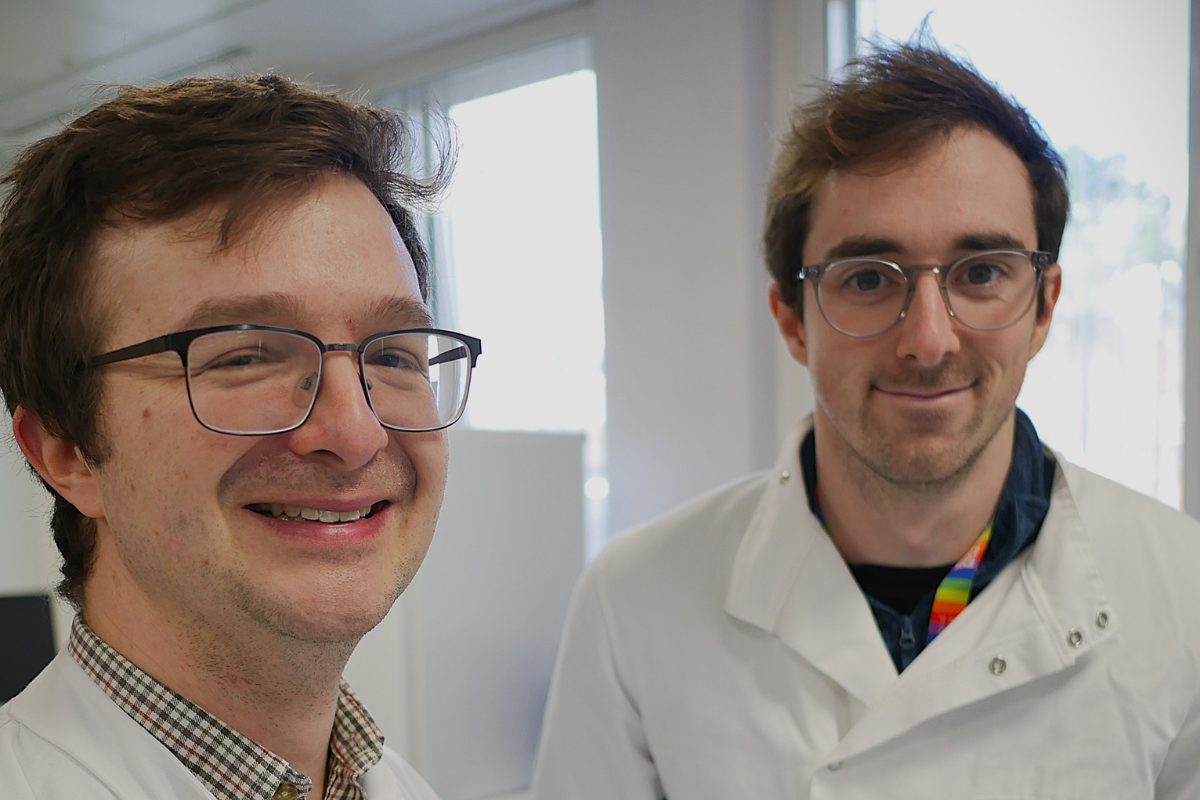
Dr Daniel Whitcomb
Pilot Project: University of Bristol, 2024
Testing how non-invasive transcranial ultrasound stimulation can be used to promote axonal remyelination in vivo.
How ultrasound could treat dementia.
Summary
Dr Daniel Whitcomb and his research team aim to investigate the effects of ultrasound on myelin, the protective coating around nerve cells in the brain that is damaged in Alzheimer’s disease.
What do we already know?
Nerve cells in the brain – called neurons - are surrounded by a protective substance called myelin. This protects neurons and helps them to function correctly. Myelin is damaged in Alzheimer’s disease, eventually disappearing completely in some areas of the brain. Lots of research suggests that loss of myelin might be a major cause of the nerve cell damage found in the brains of patients with Alzheimer’s disease. Unfortunately, there are currently no therapies that target this.
What is this project trying to find out?
In this project, Dr Daniel Whitcomb and his research team will explore a new approach that could help to regenerate the protective myelin. They will use a focused beam of ultrasound – similar to that used in medical screening – to activate the cells in the brain that produce myelin.
They hypothesise that by activating these cells, they can trigger the remyelination of neurons, protecting them from damage.
Why is this important?
Restoring myelin could help prevent loss of nerve cell function that is characteristic of Alzheimer’s disease. This may lead to a new, much-needed, effective treatment.
Ultrasound is widely used in medical practice, and so devices already exist that can be applied safely and painlessly to deliver ultrasound into specific brain areas of patients. Therefore, if this study is successful, it is quite possible that this approach could be applied and tested as a therapy for patients.
“BRACE funding is extremely important – it provides critical support to explore new ideas in dementia research, and gives a real chance to uncover a new understanding of disease – the first step towards the development of effective treatments.”
Share this page