Groundbreaking at home Alzheimer’s blood test
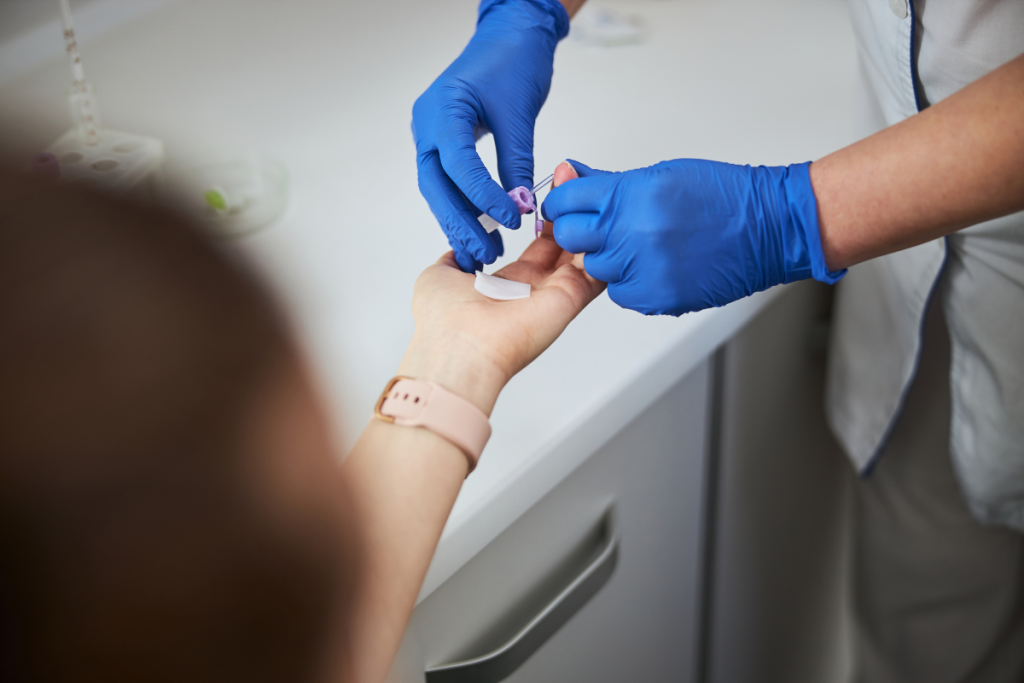
A groundbreaking finger-prick blood test has shown accuracy in detecting Alzheimer's disease. This test could open the door for millions of people living with dementia but without a diagnosis, around the world.
The tests work by measuring three different biomarkers - P-tau217, GFAP and NfL - which are found in the brains of people living with Alzheimer's.
A research project called DROP-AD, which was funded by the NIHR with support from Swedish research organisations, tested 337 participants across seven medical centres.
Research into Alzheimer’s blood test have, so far, focussed on using a vial of blood from the arm to detect the disease. These tests were licensed for use in the USA, in 2025.
This research compared the results of finger prick blood test against the accuracy of a vial of blood (the amount that is taken in a standard blood test from the arm). The results found the finger-prick tests to be 86% accurate in detecting P-tau217 levels, a key indicator of Alzheimer's.
Home Testing Breakthrough
The University of Exeter was the only site to test at-home blood finger-prick tests and their results were found to be equally accurate.
This test could eliminate the need to visit the doctor's and reduce the need for a standard blood test or other tests.
Looking Ahead
The research is ongoing and the trial is expected to conclude in 2028 when more results will be released.
A quick and simple at-home blood test could speed up diagnosis and save the NHS money by reducing the need for more expensive and complex tests such as brain scans or a lumbar puncture.
With the development of early Alzheimer's drugs, a reliable early diagnosis is more important than ever before.
The method shows promise beyond Alzheimer's, with potential to be used as a test for Parkinson's disease, multiple sclerosis, motor neurone disease, and brain injuries.
BRACE research into early diagnosis from home
The charity has been funding research into an EEG early Alzheimer’s test, called Fastball, for several years.
Fastball measures a participant’s brain waves to detect memory changes, a key indicator of Alzheimer’s, while watching flashing images. In September 2025, research results showed that the test could be reliably used in a home setting.
The NHS is currently looking into using the Fastball test to support early Alzheimer's diagnosis and perhaps, one day, it could work alongside an at home blood test.